Engagement Rings: The Most Beautiful Alternatives to Diamond
Published on • • Reading time: 12 min
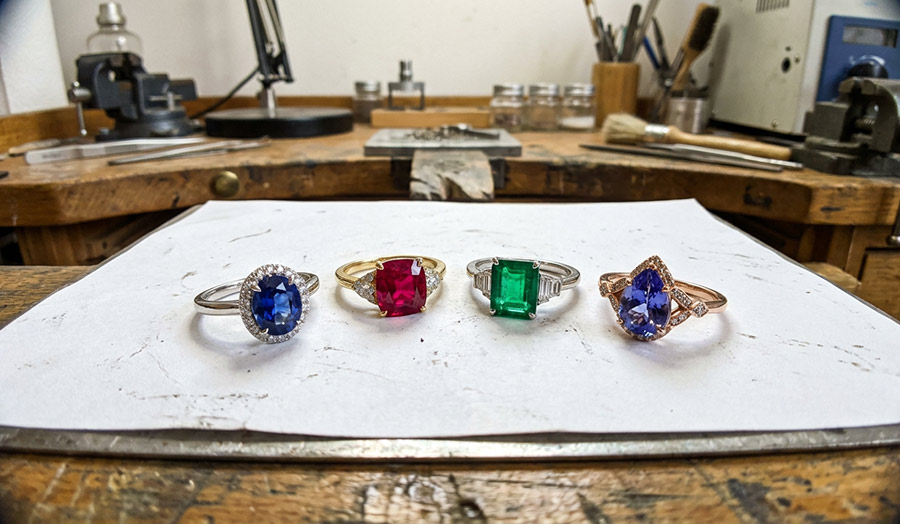
The diamond has long reigned supreme as the engagement ring stone of choice. Yet more and more couples today are choosing a coloured gemstone to seal their promise — not by default, but as a considered decision. Sapphire, ruby, emerald, tanzanite: each carries its own story, symbolism and chromatic intensity that the diamond, in its transparency, simply cannot offer.
This guide walks you through each stone with the concrete criteria that matter: hardness, care, symbolism, metal pairing and budget. Because the ring that will live on your partner's hand for decades deserves a choice as singular as your story.
👉 If you are just beginning your search, start with our complete engagement ring guide, which covers metal choice, stone shape and budget.
Why Choose an Alternative to Diamond?
The diamond became the default engagement stone in the mid-twentieth century, driven by a marketing campaign that redefined the codes of the marriage proposal. Yet in the long history of jewellery, coloured stones have often held this place of honour — the engagement ring of Lady Diana, set with a 12-carat blue sapphire, is the most famous example.
Today, choosing a coloured stone responds to multiple, entirely legitimate motivations:
- Uniqueness: a sapphire or ruby engagement ring stands out immediately in a world saturated with diamond solitaires.
- Personal symbolism: each gemstone carries its own meaning, often far richer in history than the diamond.
- Favourite colour: choosing a stone based on the style and colour preferences of the person who will wear it is a rare and thoughtful gesture.
- Birthstone: the birth month can guide the choice towards a stone that acquires an additional layer of personal meaning.
- Budget value: for an equivalent budget, a fine emerald or sapphire often delivers far greater visual impact than a diamond.
💡 Did you know?
Before the nineteenth century, the ruby was considered the engagement stone par excellence in many European cultures, symbolising passion and protection. The diamond only claimed this position with the democratisation of South African mines in the 1870s.
Essential Criteria for Choosing Your Stone
Before exploring each stone in detail, three technical criteria are decisive for a ring worn every day for years.
🔹 Hardness (Mohs scale)
This is the stone's resistance to scratching. Diamond peaks at 10/10. For an engagement ring worn every day, a minimum hardness of 7.5/10 is recommended. Below this threshold, additional precautions are needed, or wear will become visible over time.
🔹 Toughness
Distinct from hardness, toughness measures resistance to impact. A stone can be hard yet brittle — this is notably the case with certain pointed cuts that require a setting designed to protect the corners.
🔹 Chemical stability
Some stones react to acids, ultrasonic cleaners or heat. Emerald, for example, is often oiled to improve its apparent clarity — a treatment that requires periodic renewal and is incompatible with certain cleaning methods.
🔹 Treatments
The vast majority of commercially available coloured stones have undergone treatments (heat, oiling, irradiation). These are legal and standard practice, but must be disclosed. At Aden, every stone is accompanied by transparent information about its natural or treated status.
Sapphire: The Elegance of Fidelity
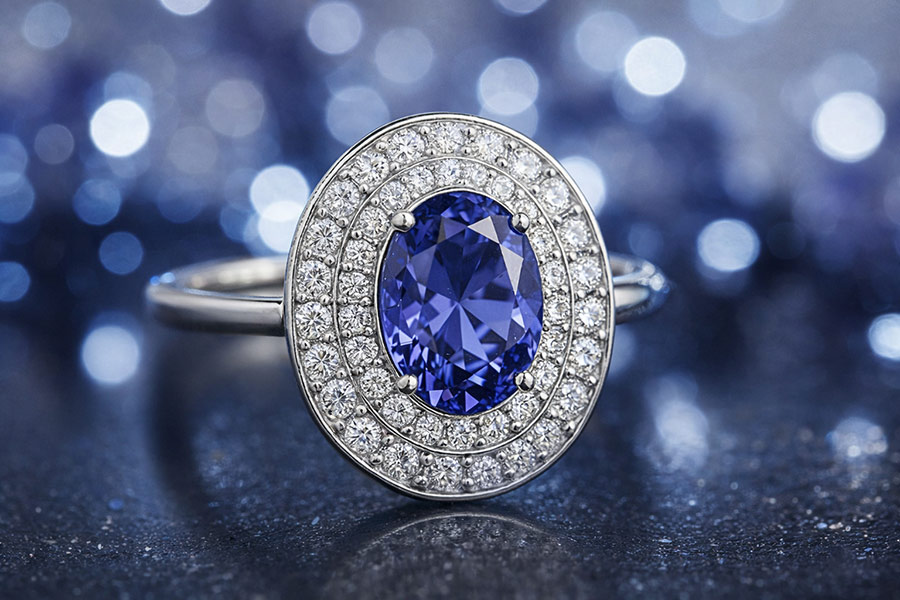
With a hardness of 9/10 on the Mohs scale, sapphire is the coloured stone best suited to everyday wear. Its robustness is matched only by its chromatic depth: from the midnight blue of Kashmir to the royal blue of Sri Lanka, taking in pink, yellow and padparadscha (pinkish-orange) sapphires, this family offers an exceptional palette.
🔹 Symbolism and history
The stone of wisdom, fidelity and sincerity, sapphire was already the stone of kings and clergy in the Middle Ages. It was believed to protect love and preserve the loyalty of spouses. Its popularity as an engagement stone exploded in 1981 when Prince Charles chose it for Lady Diana — a ring later worn by Prince William when he proposed to Kate Middleton.
🔹 Practical advice
- Recommended metal: white gold or platinum to magnify the blue; yellow gold for a warm contrast.
- Ideal cut: oval or cushion to maximise colour richness.
- Care: ultrasonic cleaning is possible (unless significant inclusions are present); soapy water for everyday cleaning.
- Common treatment: heat treatment to improve colour and clarity — declared and widely accepted in the trade.
💡 Aden Tip
For a sapphire engagement ring, prioritise colour saturation over carat weight. A 1.5-carat sapphire with an intense, even blue outshines a pale or uneven 3-carat stone every time. Read our complete sapphire guide to go further.
Ruby: Passion Embodied
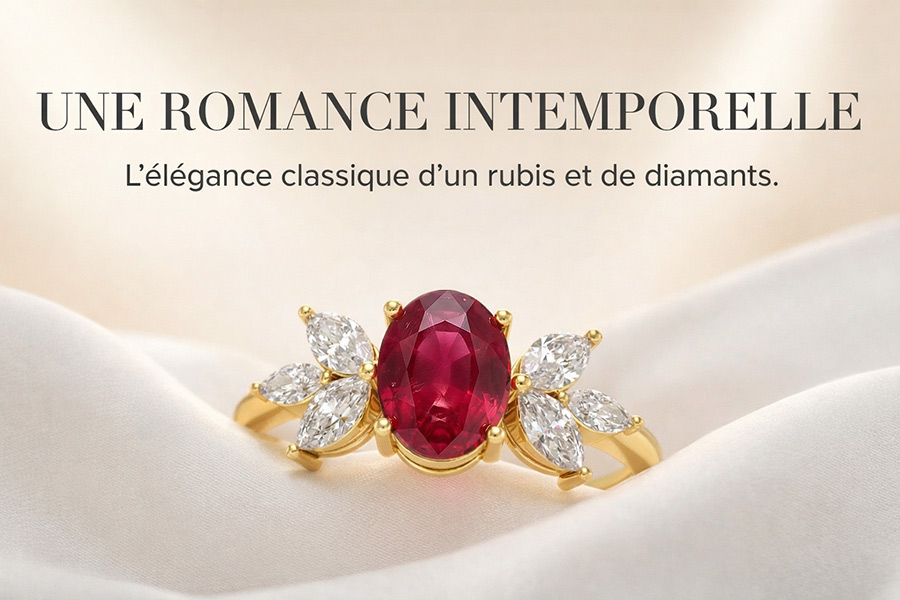
A red corundum like sapphire, ruby shares its hardness of 9/10 and exceptional durability. What sets it apart absolutely, however, is its colour: pigeon's blood red — that deep, slightly bluish red from the Mogok mines in Burma — is considered one of the pinnacles of gemology worldwide. Carat for carat, a top-quality ruby can exceed a diamond in value.
🔹 Symbolism and history
Known as ratnaraj — "king of gemstones" — in Sanskrit, the ruby symbolises romantic passion, vitality and protection. Long reserved for sovereigns and warriors, it represents today a powerful choice for those who embrace their emotions without restraint. Its blood-red colour is universally associated with ardent love and total commitment.
🔹 Practical advice
- Recommended metal: yellow or rose gold for an enveloping warmth; white gold for a striking contrast.
- Ideal cut: oval or cushion to preserve colour richness; round brilliant to maximise sparkle.
- Key point: large rubies without inclusions are extremely rare — a ruby with fine inclusions remains magnificent and authentic.
- Care: clean with soapy water; avoid ultrasonic cleaners if the ruby is fracture-filled.
💡 Aden Tip
Colour is the ruby's number one criterion. Be wary of rubies that are too dark and lean towards brown, or too light and begin to resemble spinels or garnets. Discover the detailed criteria in our ruby guide.
Emerald: The Boldness of Precious Green
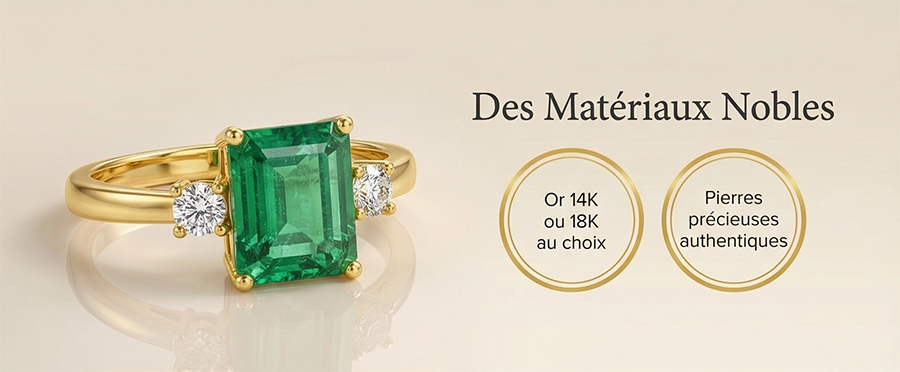
The emerald is the most daring of all diamond alternatives. Its hardness of 7.5 to 8/10 makes it perfectly suited to daily wear, provided it is given a setting that protects its edges. Its intense, living green — characteristic of the finest Colombian emeralds — has no equivalent in the mineral kingdom. And its natural inclusions — its jardin in gemology — are part of its identity, never considered flaws but rather the signature of its authenticity.
🔹 Symbolism and history
The stone of Venus in Roman antiquity, the stone of hope and renewal in Eastern traditions, the emerald has crossed centuries as a symbol of fertility, truth and growth. Cleopatra was so passionate about it that she had her portrait engraved on the finest pieces of her collection. Today, an emerald engagement ring says something powerful: a choice made by a woman who is bold enough to show her true colours.
🔹 Practical advice
- Recommended metal: yellow gold to enhance warm greens; white gold for a contemporary, luxurious effect.
- Recommended cut: the emerald cut (stepped rectangle) is its natural showcase; oval preserves the material better.
- Setting: opt for a closed or semi-closed bezel setting to protect the edges.
- Specific care: never use ultrasonic cleaners or steam — clean gently with lukewarm water and a soft cloth.
💡 Aden Tip
Cedar oil treatment is a traditional and widely accepted practice for emeralds. It improves apparent transparency without altering the intrinsic value of the stone. Easily renewable, it forms part of the normal care routine for a fine emerald. Our complete emerald guide covers all these aspects in detail.
Tanzanite: A Contemporary Rarity
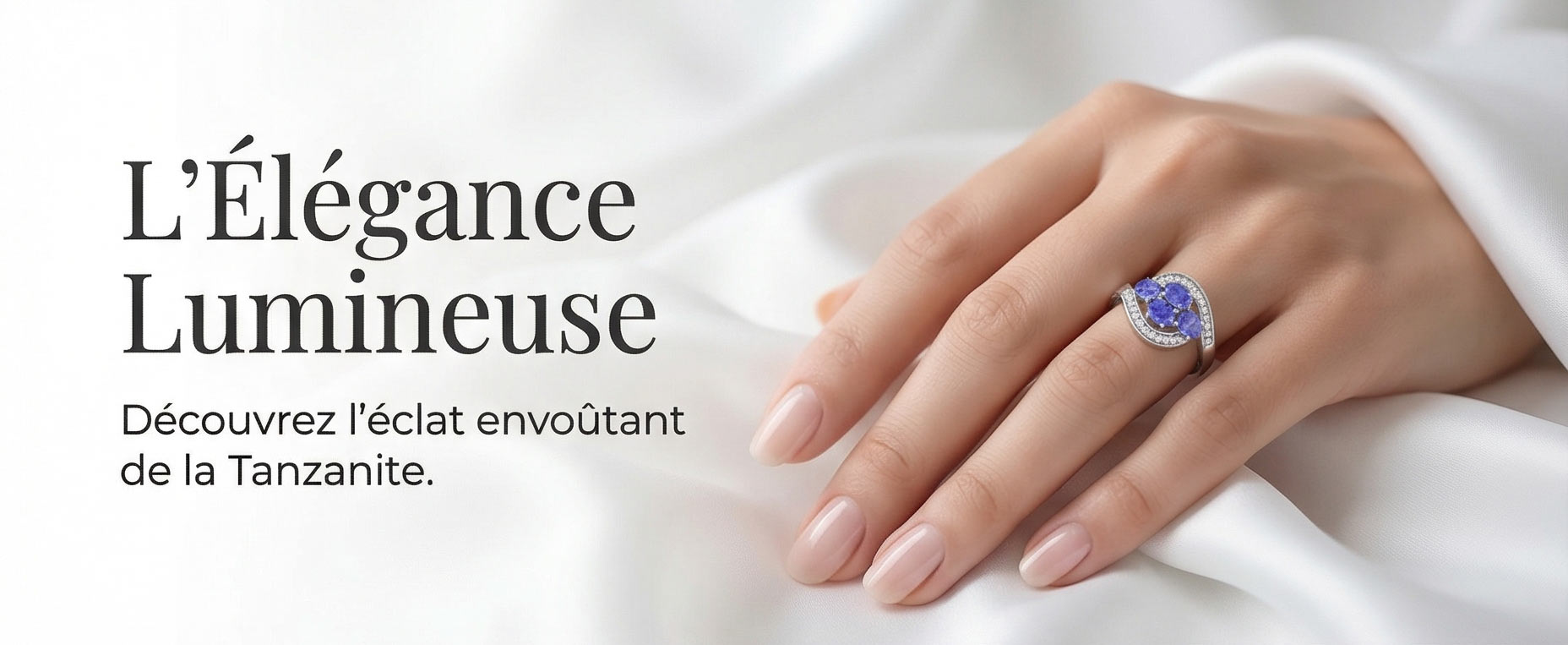
Discovered only in 1967 at the foothills of Kilimanjaro in Tanzania, tanzanite is the most modern and the rarest of the stones presented here. Its unique deposit — a strip of just a few square kilometres — gives it absolute rarity: known reserves are estimated to be exhausted within twenty to thirty years. Its trichroic blue-violet colour, which shifts with the angle of light, is genuinely unique in the mineral world.
🔹 Why choose tanzanite
With a hardness of 6 to 7/10, tanzanite requires more care than sapphire or ruby. However, its price remains more accessible for larger sizes, and its growing rarity also makes it a stone of lasting value. For someone with a confident personal style, aware that they are wearing a stone few people can obtain, tanzanite speaks for itself.
🔹 Practical advice
- Recommended metal: white gold or platinum to avoid interfering with the blue and violet hues.
- Recommended cut: oval or cushion, which best reveal the stone's trichroism.
- Wearing recommendation: consider an evening or weekend ring if you lead a very active lifestyle. For daily wear, a protective setting is essential.
- Care: lukewarm water only — no ultrasonics, no steam, no thermal shocks.
💡 Did you know?
Tanzanite is estimated to be 1,000 times rarer than diamond, according to current geological assessments. Its Tanzanian deposit is the only one known anywhere in the world. Discover the full story of this extraordinary stone in our complete tanzanite guide.
Other Stones Worth Considering
Beyond the four great precious stones, other gems deserve consideration depending on the style and sensibility of the person who will wear the ring.
🔹 Aquamarine
The birthstone for March, aquamarine offers a limpid, aquatic blue-green of remarkable natural clarity. With a hardness of 7.5/10, it is perfectly suited to everyday wear. Its charm lies in its visual lightness and ease of care.
View our aquamarine jewellery →
🔹 Tourmaline
The most colourful of all fine stones, tourmaline exists in a breathtaking chromatic range: pink Rubellite, blue Indicolite, green Chrome, multicoloured Watermelon. Its hardness of 7–7.5/10 and relative accessibility make it a compelling option for a spectacular visual result.
View our tourmaline jewellery →
🔹 Topaz
Imperial topaz — warm orange with pink undertones — is one of the most remarkable stones there is, yet far too often overlooked. Hardness 8/10, vivid brilliance, unique colour: it represents a highly original alternative for an engagement ring that truly goes off the beaten track.
View our topaz jewellery →
🔹 Garnet
Often reduced to a deep red, garnet actually exists across a far wider spectrum: green Demantoid, orange Spessartine, pink Rhodolite. Its hardness of 6.5–7.5/10 and accessible price point allow for strikingly large stones within a controlled budget.
View our garnet jewellery →
Engagement Stone Comparison Table
A quick-reference summary of the essential criteria for comparing diamond alternatives at a glance:
| Stone | Hardness (Mohs) | Symbolism | Ideal metal | Daily wear | Indicative budget |
|---|---|---|---|---|---|
| Sapphire | 9/10 | Fidelity, wisdom | White gold, platinum | ✅ Excellent | €800 – €15,000+ |
| Ruby | 9/10 | Passion, protection | Yellow gold, rose gold | ✅ Excellent | €1,000 – €20,000+ |
| Emerald | 7.5–8/10 | Hope, truth | Yellow gold, white gold | ✅ Good (with care) | €500 – €12,000+ |
| Tanzanite | 6–7/10 | Rarity, uniqueness | White gold, platinum | ⚠️ Mindful wear | €400 – €5,000+ |
| Aquamarine | 7.5/10 | Serenity, courage | White gold, rose gold | ✅ Good | €200 – €3,000+ |
| Diamond (reference) | 10/10 | Eternity, purity | All metals | ✅ Excellent | €800 – unlimited |
Bespoke Creation: Your Ring, Your Stone
An engagement ring with a coloured gemstone truly comes into its own when it is designed from scratch. At Aden, we select each precious stone individually according to your criteria — colour, size, provenance, budget — before designing with you the setting that will show it at its very best.
The creation process begins with a conversation about your ideas, the lifestyle of the person who will wear the ring, and the stones that appeal to you. We then present a curated selection of stones matched to your criteria, before our craftspeople create the setting in the metal of your choice — 18-carat yellow gold, white gold, rose gold or platinum.
✦ What to expect
- Personalised guidance on stone selection
- Support in choosing metal and setting style
- Artisanal craftsmanship in our workshop
- Careful delivery with the stone's certificate
- After-sales service and maintenance included
✦ Timelines and budget
- Creation time: 3 to 6 weeks depending on complexity
- Budget tailored to your project, with no minimum imposed
- Option to view and approve the stone before work begins
- Instalment payment available
💎 Create the engagement ring that reflects her
Our craftspeople are here to design a one-of-a-kind ring with the coloured gemstone that is right for you.
Discover bespoke creationFrequently Asked Questions
Which gemstone should I choose instead of a diamond for an engagement ring?
Sapphire, ruby and emerald are the most popular alternatives. Their high hardness (7.5 to 9/10 on the Mohs scale) makes them perfectly suited to everyday wear. Tanzanite offers a rarer, more exclusive option. The choice depends above all on the symbolism you are looking for, the preferred colour, and the style of the person who will wear the ring.
Is a coloured stone engagement ring durable enough for everyday wear?
Yes, provided you choose a stone with sufficient hardness. Sapphire and ruby both rate 9/10, almost on a par with diamond. Emerald (7.5–8/10) requires a protective setting but is suitable for daily wear with a few precautions. Tanzanite, being more delicate (6–7/10), is best suited to careful, attentive wear or reserved for special occasions.
Is a diamond-free engagement ring less expensive?
Not necessarily. A Kashmir sapphire, an untreated Burmese ruby or a high-quality Colombian emerald can exceed the value of an average diamond. That said, for a comparable budget, a fine coloured stone often delivers far greater visual presence than an equivalent diamond.
Can I have a bespoke engagement ring made with a coloured gemstone?
Absolutely. At Aden, we create bespoke engagement rings by selecting the stone with you according to your colour, size and budget criteria. Every piece is made in our workshop using the metal of your choice: yellow gold, white gold, rose gold or platinum.
How do I care for an engagement ring with a coloured stone?
A gentle clean with warm, soapy water and a soft toothbrush is sufficient for most stones. Avoid ultrasonic cleaners for emeralds and tanzanites. Remove the ring during physical activity, gardening and when using household cleaning products. An annual check with a jeweller allows you to inspect the condition of the prongs and the setting.
Go Further
Choosing a coloured gemstone for an engagement ring means giving a piece that will be like no other — worn every day as a declaration of individuality and love. Every stone tells a story. All that remains is to find the one that belongs to yours.