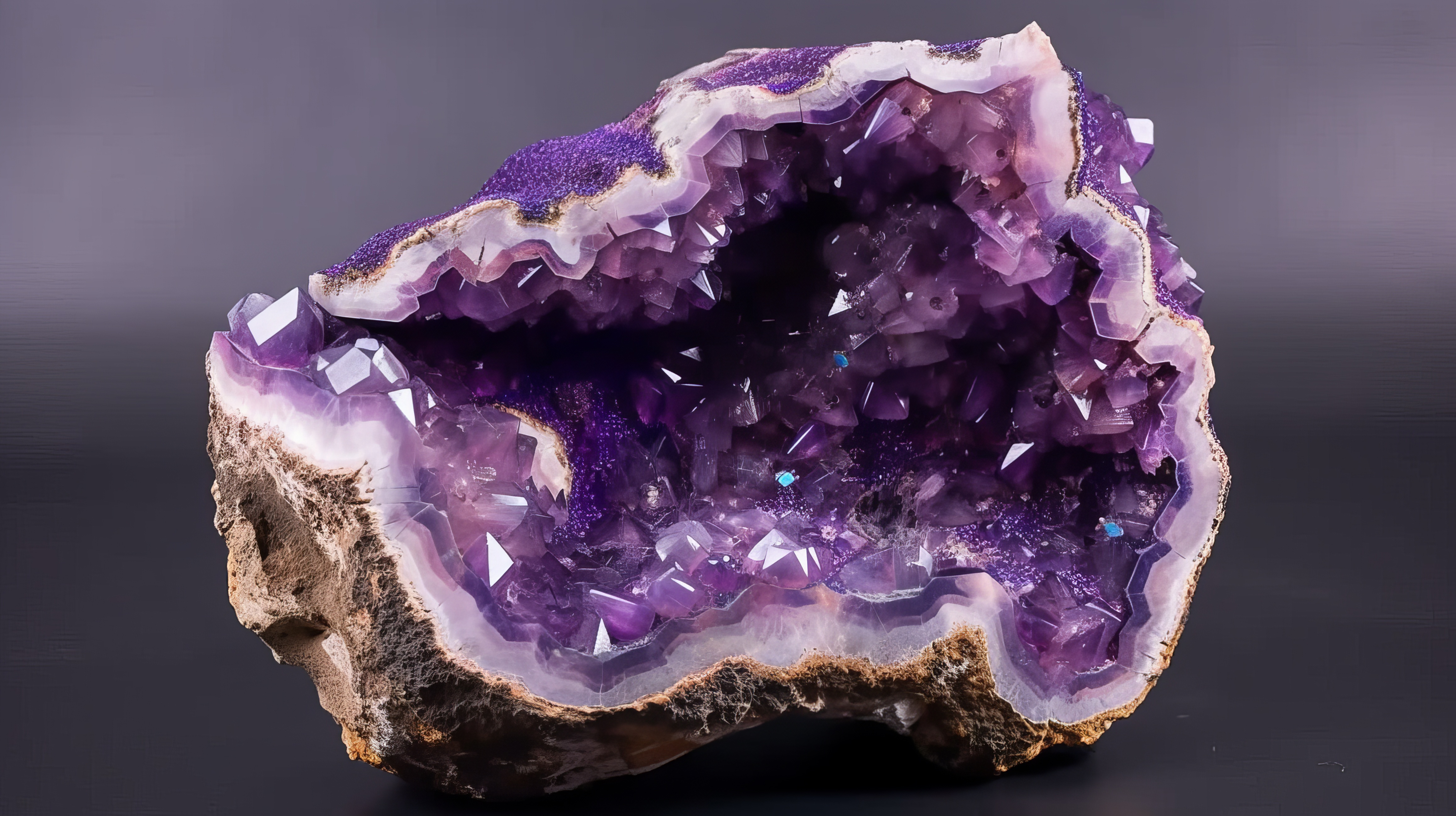
Amethyst is the purple stone par excellence. A variety of quartz, it has captivated people for millennia with a colour ranging from delicate lilac to the deepest purple. The birthstone for February, it symbolises wisdom, serenity and protection.
In this guide we describe its characteristics, deposits, varieties and symbolism, followed by our advice on choosing and caring for it. Discover also our collection of amethyst jewelry.
(see our full collection of amethyst jewelry here)
What is amethyst? Definition and characteristics
Amethyst is a purple variety of quartz (silicon dioxide, SiO₂). Its colour comes from iron in the crystal, combined with natural irradiation that creates colour centres. The deeper and more even the shade, the more sought-after the stone.
🔹 Main characteristics
- Composition: SiO₂ (silicon dioxide)
- Hardness: 7 on the Mohs scale
- Crystal system: hexagonal
- Transparency: transparent to translucent
- Colour: from pale lilac to intense purple
🔹 Shades of purple
- Light lilac: a soft shade, often called “Rose de France”
- Medium purple: the classic colour, very common in jewelry
- Deep purple: the finest qualities, with red or blue flashes
💡 Did you know?
The name “amethyst” comes from the Greek amethystos, “not drunk”. The Greeks credited it with the power to protect against intoxication, and people still sometimes drink from amethyst cups. In the Middle Ages, bishops wore an amethyst ring, a symbol of piety and sobriety.
Origin and deposits: where does amethyst come from?
Amethyst forms in cavities of volcanic rocks, where silica-rich solutions slowly crystallise. These cavities, called geodes, can reach several metres in length. To place amethyst among other gems, see our guide to gemstone jewelry.
| Origin | Characteristics | Special features |
|---|
| Brazil | Medium purple, good transparency | World’s leading source, fine stones for faceting |
| Uruguay | Intense purple, giant geodes | Very saturated crystals, famous for their large geodes |
| Zambia | Deep purple with red and blue flashes | Among the most sought-after qualities |
| Madagascar | Varied, sometimes unique shades | Often stones of fine size |
| Russia (Urals) | Rich purple | Historic deposits, rarer today |
Amethyst in jewelry: how to choose it
🔹 Quality criteria when buying
- Colour intensity: choose a deep, even purple without pale areas
- Transparency: look for a clear stone with no inclusions visible to the naked eye
- Cut: check symmetry and proportions, which make the light play
- Polish: make sure the lustre is bright and regular
🔹 A piece for every style
Hard and affordable, amethyst suits all kinds of jewelry: rings, earrings, bracelets and amethyst necklaces and pendants. It pairs with 925 silver as well as yellow, rose or white gold, and combines with citrine, rose quartz or diamonds. Discover these combinations in our multi-stone rings.
Dreaming of a unique piece? Our custom creation service showcases the amethyst of your choice according to your wishes.
Care and storage
| Do | Avoid |
|---|
- Clean with lukewarm water and mild soap
- Wipe with a soft, lint-free cloth
- Store separately from other jewelry
| - Leaving it in the sun for long periods, which can fade the stone
- Heating it or exposing it to thermal shocks
- Using harsh chemicals
|
💡 Care tip
When heated to high temperatures, amethyst can turn yellow, orange or green: this is how some citrines are obtained. Keep your jewelry away from heat sources and direct light.
Virtues and symbolism
In lithotherapy, amethyst is the stone of serenity and intuition, associated with the crown chakra. These virtues belong to tradition and are not scientifically recognised:
- Calm: helping to manage stress and anxiety
- Sleep: encouraging more peaceful rest
- Intuition: supporting reflection and meditation
- Protection: a symbol of wisdom and clarity
Today it also finds its way into our homes as decorative geodes, ambient lamps and ornaments.
Frequently asked questions about amethyst
How can you recognise a genuine amethyst?
A natural amethyst shows slight colour variations (zoning) and a hardness of 7. A perfectly uniform shade with no inclusions at all should raise suspicion: ask for a certificate or a gemologist’s opinion.
Can amethyst fade?
Yes, prolonged exposure to sun or heat can weaken its colour.
What is the difference between natural and synthetic amethyst?
Synthetic stones have a very regular colour and few inclusions. Only a gemological examination can tell them apart with certainty.
Can amethyst be worn every day?
Yes, its hardness of 7 makes it suitable for daily wear, provided you protect it from heavy knocks.
Conclusion
Amethyst combines beauty, affordability and durability. Whether as a gift for a February birth or a piece to treat yourself, it adds a touch of colour and serenity to every outfit.
To continue exploring stones, browse the other articles of the Aden Journal or our guide to choosing jewelry that suits your style.